
How to start learning Chinese without getting lost
Pinyin, tones, and characters explained for English speakers, with a 15-minute daily routine and the free apps that actually help.
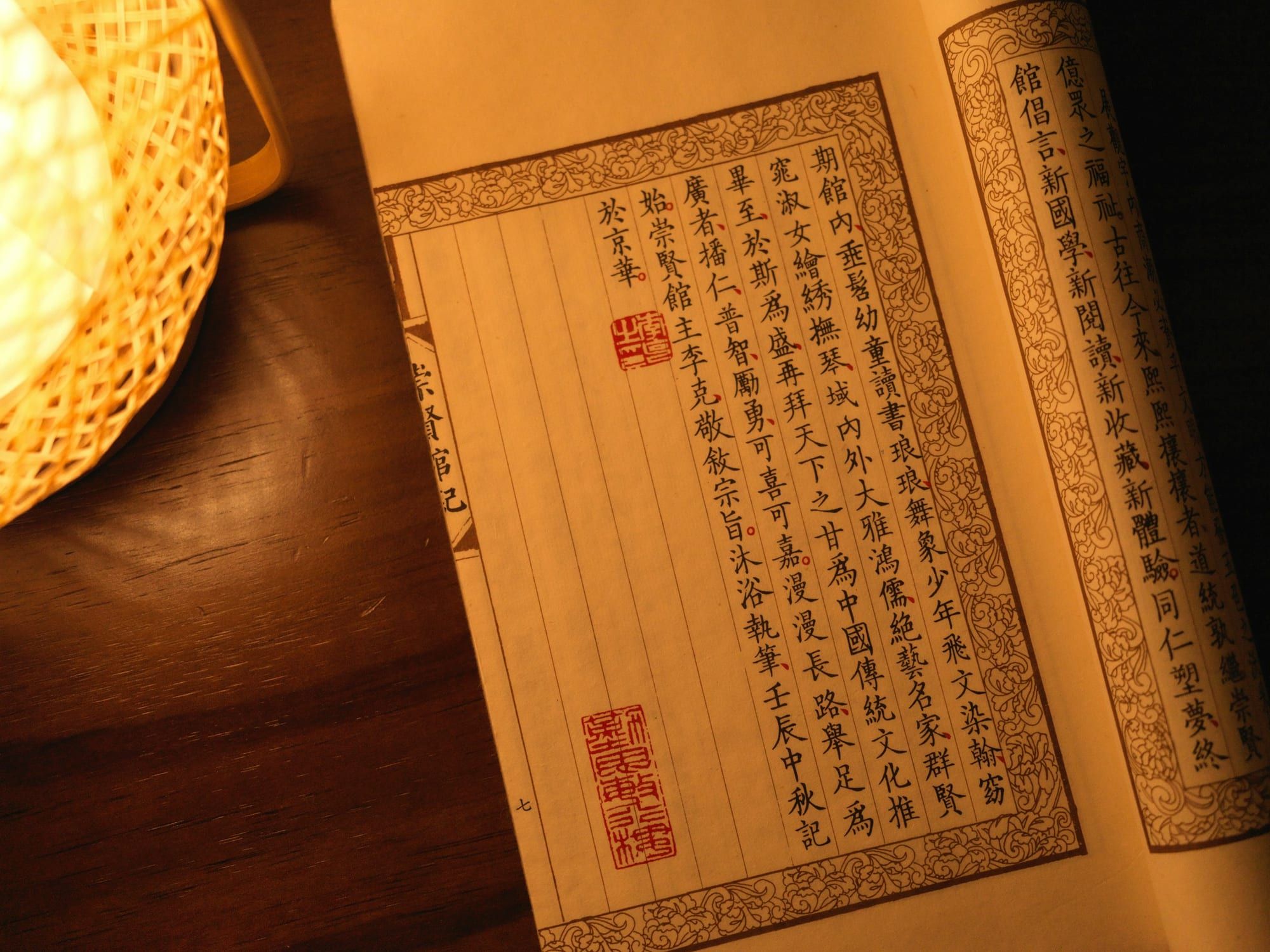
Chinese has a reputation for being impossible, but it has a surprisingly friendly side: verbs don’t conjugate, there’s no grammatical gender, and there are almost no plurals. “I eat,” “you ate,” and “they’re going to eat” all use the same verb. The hard part is somewhere else: the tones and the characters. If you tackle them in the right order, you’ll make progress much faster.
1. Start with pinyin
Pinyin is the way to write Chinese with the letters we already know. It tells you how each word sounds. For example, 你好 (hello) is written nǐ hǎo in pinyin.
Heads up: some letters don’t sound the way they do in English. The x sounds like something between “s” and “sh” (xiè xie, thank you), the q sounds like the “ch” in “cheese” (qī, seven), and the j is close to the “j” in “jeep” (jiā, home). Spend your first few weeks listening to and repeating syllables; everything else builds on this.
2. Tones change the meaning
Mandarin has four tones plus a neutral one. The same syllable with a different tone is a different word. The classic example is ma:
| Pinyin | Character | Meaning | How it sounds |
|---|---|---|---|
| mā | 妈 | mom | High and level |
| má | 麻 | hemp | Rises, like when you ask “What?” |
| mǎ | 马 | horse | Dips down and comes back up |
| mà | 骂 | to scold | Drops hard, like a command |
You don’t need to get them perfect from day one, but you do want to train your ear from the start. Record yourself and compare it with a native speaker.
3. Characters are written in order
Each character is written with strokes in a fixed order: generally from top to bottom and from left to right, with horizontal lines before vertical ones. Learning the order helps you memorize characters and makes your handwriting easier to read. Watch how these three are written:
-
rén
“person”
-
dà
“big”
-
hǎo
“good, well”
Notice something? 大 is 人 with its arms spread wide, and 好 puts together 女 (woman) and 子 (child). Many characters are built from pieces that repeat, called radicals. Once you recognize the pieces, each new character takes less effort.
4. A 15-minute daily routine
A little every day beats a lot on the weekend:
- 10 minutes with SuperChinese, the app Gabo recommends: one short lesson, repeating out loud. Its AI teacher corrects your tones and pronunciation.
- 5 minutes of character review with flashcards in Anki, or a short story in Du Chinese.
To look up words, Pleco is the dictionary almost everyone who studies Chinese uses. And if you want to practice writing, an assistant like DeepSeek can correct your sentences and give you examples with pinyin.
5. What about the HSK?
The HSK is the official Chinese exam for foreigners, and it has several levels. You don’t have to take it, but its vocabulary lists are a good guide to what to learn first. Start with the level 1 vocabulary: greetings, numbers, family, food, and phrases to introduce yourself.
6. Learn with Gabo
Gabo lives in China and shares the language and culture on his social media. Follow him on YouTube, Instagram, and TikTok to hear Chinese the way it’s spoken on the street.
And if you’re traveling, don’t miss the guide to apps for traveling to China.